
Balanced breeding for all systems
With common sense and field-based market knowledge, we are convinced that Kona Bay Balance is the ideal solution for all system types. This line is best suited to environments with seasonal fluctuations and moderate biosecurity. Under optimal conditions, the growth rates are close to Kona Bay Speed, but with a higher level of vigor. This line most closely resembles the original Kona Bay line, known for enhanced reproductive performance.
- Ideal for all system types with a high level of vigor
- Excels in fast growth in controlled, biosecure grow-out systems
- Enhanced reproductive performance
Performance data
As Kona Bay Balance is based on our original Kona Bay product line, the performance data are solid. With advancing breeding and genetic technologies, we are convinced that further improvements in hatchery and farm results are only a matter of time.
| Hatchery | Farm | ||
|---|---|---|---|
| Mating percentage | 15 - 22% | ADG range | 0.27 - 0.33 |
| Nauplii per spawn | 250 - 350k | Average pond survivals | 70 - 80% |
| Survival to PL | 65 - 75% | Preferred grow out conditions | Semi-intensive, Intensive, Biofloc |
Performance results and feeding guidelines may vary by country and farming conditions. For tailored advice, please contact your local Kona Bay specialist.
Recommended conditioning/feeding
Three weeks of conditioning on high nutrition feed prior to commercial production. The use of biosecure, disinfected wet or live feeds (polychaetes/squid/mollusks) is highly recommended.
General feeding regime guidelines as a percentage of total biomass in each maturation system tank:
- Squid: 5-8% per day
- Polychaete worms: 18-24% per day
- Other mollusks (clams/oysters, if desired): 4-7% per day
- Commercial semi-moist broodstock conditioning pellets: 3% per day (should be first feeding of day)
Feedings should be alternated throughout the day (4-6 times) and monitored to feed to satiation and avoid overfeeding. The excess feed should be removed prior to the next feeding, and adjustments made accordingly. The appetite of broodstock will change based on the molt cycle as well as the increase of nutritional demand during the onset of egg/sperm development.
If available, SPF certified feeds are recommended to mitigate possible infection by pathogens carried by wild polychaetes, mollusks, and squid. If certified SPF feeds are not available, then proper disinfection using a povidone-iodine solution at 20ppm concentration for 10-15 min followed by a thorough rinse in clean water is another option.
*Performance results and feeding guidelines may vary by country and farmingconditions. For tailored advice, please contact your local Kona Bay specialist.
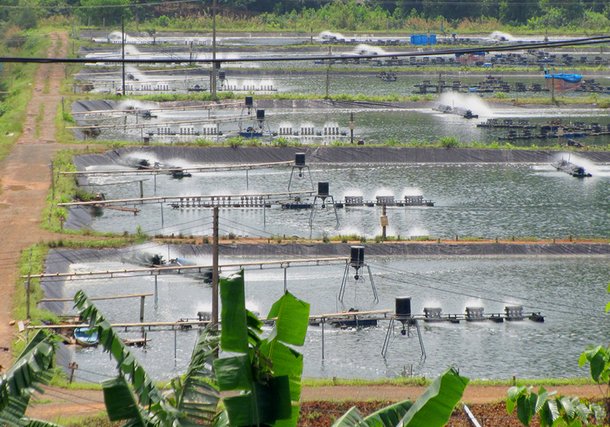
Automatic shrimp feeding systems