Published on Aug. 5, 2026
Quality Shrimp Seed Must Deliver Tangible Economic Returns for Farmers
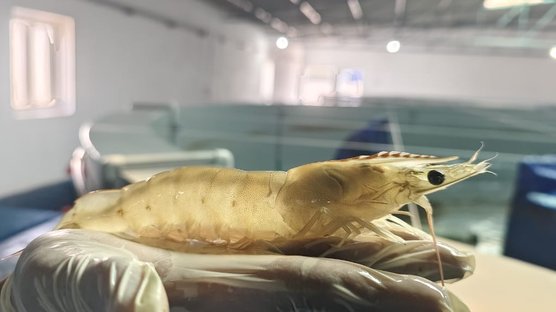
Escalating disease pressures, unpredictable weather, and rising production costs are forcing the Vietnamese shrimp industry to sharpen its focus on stock quality. Beyond fast growth, farmers now demand stock that offers high survival rates, consistent performance, and strong adaptability to real-world tank conditions. Leveraging its breeding foundation in Hawaii and a global R&D network under Hendrix Genetics, Kona Bay is developing tailored broodstock lines for specific markets.
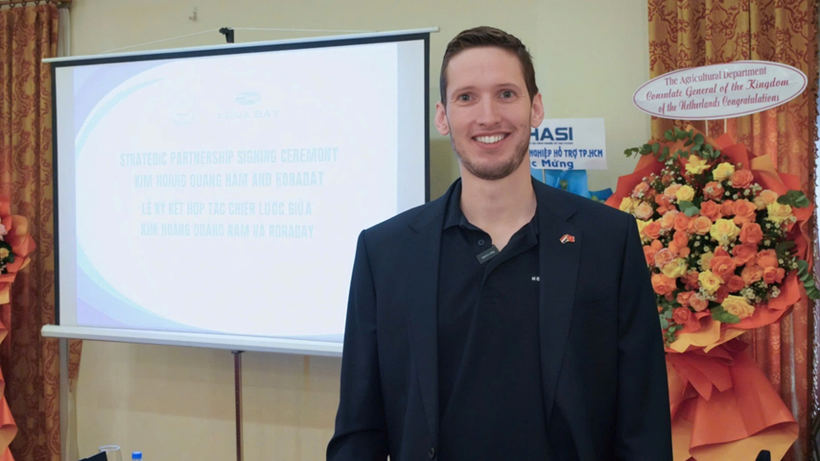
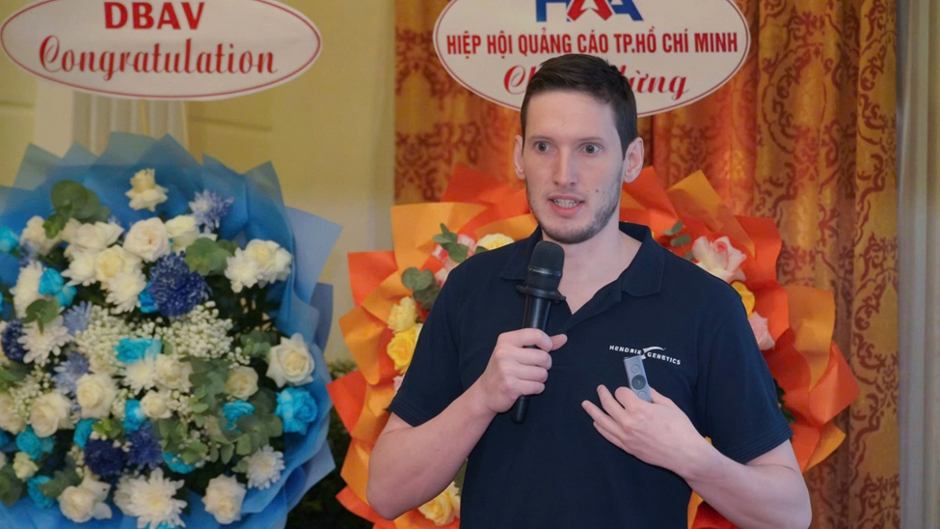
To delve deeper into these issues, the Vietnam Livestock Magazine spoke with Mr. Jarl van den Berg, Managing Director of Kona Bay, on June 29. The exclusive interview explored the company's shrimp breeding strategies, the role of the “Balance Pro” line, and the outlook for the Vietnamese shrimp industry.
Genetics as the Foundation
Interviewer: Could you briefly introduce Kona Bay and its strategic role within Hendrix Genetics?
Hendrix Genetics is a global and multi-specie genetics company with a mission to help farmers around the world produce animal protein with high quality genetics. Kona Bay is integral to succeeding their mission by supporting a 6 million metric tonne industry with high quality shrimp genetics.
At the heart of Kona Bay is our advanced genetics and R&D program. We leverage Hendrix Genetics’ research infrastructure, breeding systems, and genetic expertise to develop shrimp lines that are better aligned with real-world production needs. Backed by Hendrix Genetics' extensive global team of geneticists, we have the scientific foundation required to drive continuous product improvement.
In Hawaii, Kona Bay operates a breeding facility under strict biosecurity protocols. This isolation from major commercial shrimp-producing regions is critical to mitigating disease risks and protecting our nuclear breeding stock. Leveraging this secure foundation, we develop and supply premium broodstock to global markets, including Vietnam. Kona Bay achieves this by ensuring that specific lines are tested, and challenged in the field and disease labs to identify the right candidates in the secured location.
How is Balance Pro positioned for the Vietnamese market?
“Balance Pro” is one of the four products of Kona Bay, and is developed with the primary goal of striking a perfect balance among key performance indicators in shrimp farming: growth rate, survival rate, uniformity, and adaptability to production conditions. These attributes closely align with the core demands of the Vietnamese market.
In Vietnam, shrimp farmers constantly battle unpredictable fluctuations, from heavy rainfall and shifting water quality to heavy disease pressures. Under these volatile conditions, fast growth alone is no longer enough. Farmers require a product that delivers consistent, reliable performance and fits real-world tank conditions.
This is exactly where “Balance Pro” comes in. We position this line to help farmers achieve that crucial balance. Our goal is twofold: to enable hatcheries to produce high-quality, uniform postlarvae, and to ensure commercial farmers achieve strong growth, high survival rates, and ultimately, superior biomass at harvest.
Mitigating Risks Through High-Quality Seed
What are the key performance expectations farmers can have with Balance Pro?
Farmers can look forward to a crop that exhibits strong growth rates, high survival, excellent uniformity, and consistent biomass production at harvest. These key performance factors directly translate into a farm’s bottom line. When the farm utilizes high-quality broodstock, they produce superior, more uniform shrimp stock. Consequently, commercial farmers can stock their tanks with a higher-grade stock right from the start. This initial stage is critical, as stock quality forms the bedrock of a successful crop cycle.
Of course, shrimp stock is not the sole determinant of success. A profitable harvest also hinges on rigorous tank management, water quality, nutrition, biosecurity protocols, and disease prevention. However, by starting with a robust, well-bred stock, farmers establish a far stronger foundation to mitigate operational risks and optimize their overall yield.
How does Balance Pro help address current challenges in shrimp farming?
Currently, shrimp farmers are confronting a multitude of challenges. There are periods marked by rapid weather shifts, heavy rainfall, and highly volatile water quality. Furthermore, persistent disease pressures remain a major bottleneck across many farming regions. Collectively, these factors directly jeopardize growth rates, survival, and harvest yields.
Against this backdrop, a shrimp line backed by a robust, stable genetic foundation and enhanced adaptability offers farmers a critical buffer against operational risks. The “Balance Pro” was engineered specifically to help farmers secure more reliable outcomes under real-world conditions. However, no single stock product can serve as a silver bullet. A successful approach must integrate high-quality stock, rigorous parent-stock farm management, sound tank practices, and tailored technical support. Challenges vary by region: while disease may be the primary threat in one area, water quality dominates in another, and elsewhere, the most pressing equation remains cutting production costs.
Partnering for Progress
Kona Bay broodstock is often associated with Hawaii. Can you share more about your global supply approach, including Indonesia?
Hawaii serves as the cornerstone of the Kona Bay program. This is where we develop and maintain our genetic lines under stringent biosecurity protocols. Isolating our facilities from major commercial production hubs allows for superior disease control and ensures the protection of our nuclear breeding stock.
From Hawaii, we supply premium broodstock to various global markets. Depending on the specific needs of each client and region, our broodstock can be tailored and supplied to production facilities to generate high-quality postlarvae. The ultimate objective is to ensure that farmers in nations such as Vietnam, Indonesia, India, and other key markets have seamless access to top-tier stock quality.
Our Vision is to set the standard of sustainable shrimp breeding and production. To dispatch large broodstock directly from our Hawaiian facilities is not a preferred scenario for us. Hence, we have invested in our own, and collaborated with others, to send parent-post-larvae (PPLs) instead to reduce our impact on the environment, reduce costs to the farmers, and have a secondary-local selection step. This is what we have established in Indonesia, India and we are looking to the success in Vietnam.
Kona Bay and Hendrix Genetics work closely with partners. How does this collaboration support farmers in practice?
There are different paths to growth, for Kona Bay our preferred path is trusting others and collaborating to use each other strengths for the development of the industry. Our core strength is R&D and our ability to develop strains that are adapted to the unique environmental challenges. To make sure we have adequately tuned to what the farmers want, we partner with local industry leaders who deeply understand the market dynamics, and farmers' challenges and opportunities. This collaboration goes beyond merely supplying broodstock and technical service; it is a shared journey of continuous monitoring, evaluation, performance optimization, and conducting specific disease and environmental challenges.
How do you see the shrimp industry evolving in Vietnam and Southeast Asia in the next few years?
I firmly believe that Vietnam and Southeast Asia will continue to be vital pillars of the global shrimp industry. These markets possess rich production experience, a dynamic network of enterprises, and a clear ambition for growth despite the recent plateau. However, the shrimp sector in the coming years must evolve toward greater efficiency and sustainability. Farmers will look beyond sheer volume; their focus will increasingly pivot toward production costs, survival rates, product quality, and the capacity to meet stringent market demands
What are the main challenges the industry is facing, and how can they be addressed?
The greatest challenge currently facing the shrimp industry lies in the convergence of multiple factors: disease, environmental volatility, rising production costs, and inconsistent harvest outcomes. When these pressures hit simultaneously, farmers face severe headwinds in maintaining economic viability. Addressing this requires a holistic approach, beginning with the improvement of stock quality. A robust, uniform stock backed by a solid genetic foundation gives farmers a vital head start. However, this must be followed by rigorous management of water quality, nutrition, stocking density, biosecurity, and disease prevention.
What are Kona Bay’s key investments and partnerships in Vietnam, and how do they support the long-term development of the industry?
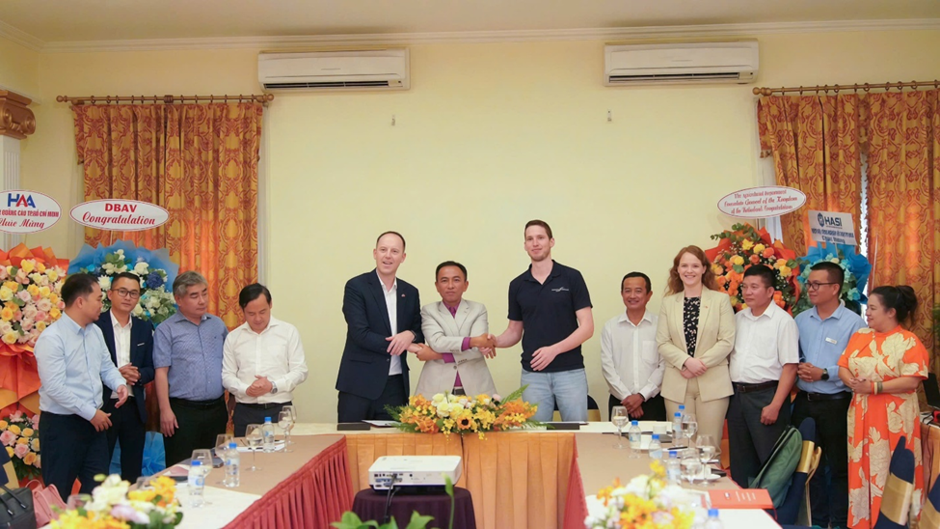
Vietnam is a market of paramount importance where Kona Bay is fully committed to a long-term partnership. We will continue to invest in our genetic lines while collaborating with local partners to deliver solutions tailored to the specific needs of commercial growers. Our objective extends far beyond simply selling broodstock. More importantly, we aim to empower the entire production chain to achieve higher efficiency, from the breeding facilities to the final harvest. When hatcheries are equipped with premium broodstock, rigorous operational protocols, and strict quality control, commercial grow-out farmers gain access to quality seed which is the foundation of their success. As farmers succeed, the entire industry secures a more sustainable foundation for future growth.
I firmly believe that the future success of the Vietnamese shrimp sector will hinge on a sharper focus on quality, performance consistency, and chain-wide collaboration. With 'Balance Pro' and our broader product portfolio, Kona Bay aspires to contribute meaningfully to this evolution—supporting farmers in mitigating risks, enhancing efficiency, and driving sustainable development.
Thank you very much!
Article from July 2026, translated into English and retrieved with permission from Người Nuôi Tôm (the Vietnam Livestock Magazine).